Table of Contents
Have you ever wondered how a perfect track can hit you right in the feels, make your heart race, or just melt the stress away? Turns out, there's solid science backing why music does all that and way more for your body, mind, soul, and even your day-to-day grind.
In fact, many studies have revealed that music ain't just background noise; it's like free therapy with a beat. Stick with this blog, and we'll break down how listening to your favourites and soulful tracks rewires your brain, chills your nerves, pumps your heart, and keeps you moving like you're 20 again.
We're talking real talk here, no fluff, just the good stuff on benefits of listening to music and benefits of music classes that'll have you queuing up Spotify tonight.
Learn why enrolling for online or offline music classes is essential in the blog below!

How Music Sneaks Into Your Brain And Why It Sticks
Think of yourself: You're blasting some classic rock or a smooth R&B vibe. Those sound waves bounce into your ear, vibrate your eardrum like a drum solo, and zip up the auditory nerve straight to your brainstem. Boom and your brain rebuilds it into melody, rhythm, lyrics that hit differently.
Researchers at Johns Hopkins used fMRI machines to scan jazz musicians and rappers as they improvised. They watched the brain light up in many areas, from the parts handling math and patterns to the emotional centers, all working together fully.
The benefits of listening to music have a special structure, like a building you can feel deep inside. Notes connect through math, rhythms beat like your heart, and your brain works hard to put it all together without you realizing. That's why an old high school song can pull you back to those days, bringing emotions with it.
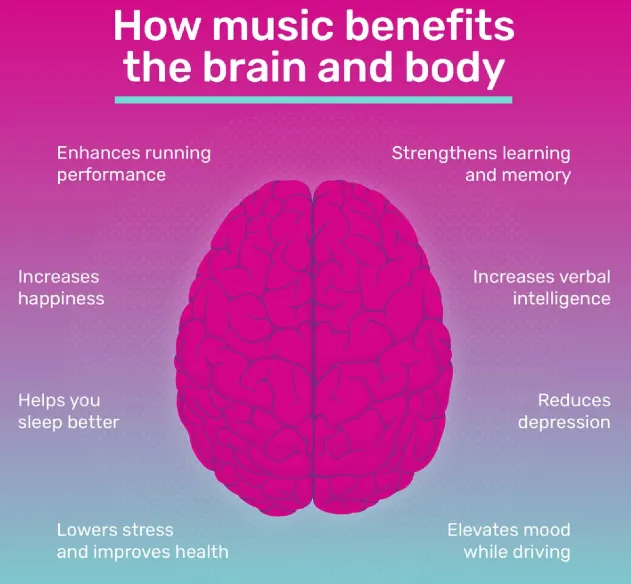
At the same time, it releases happy chemicals that change a bad day into one where you feel strong. Plus, moving to the music, like dancing, acts as exercise. Doctors say about the benefits of music that it makes your brain work better, helps you remember things more easily, and cuts down cortisol, the stress hormone that tenses you up.
Benefits of Music to Mind
Music Boosts Learning
- Play instrumental music while studying, and it helps your brain learn better. Music changes the connections in your brain, helping it grow and adapt.
- This is called neuroplasticity, your brain's way of rewiring itself to handle new things.
- Children and adults who learn piano or guitar do better on tests.
- They improve in seeing details, speaking smoothly, thinking creatively, solving puzzles, and understanding space.
FYI: But be careful as songs with words can pull your focus away during reading. Stick to music without lyrics for the best concentration.
Improving Your Memory
- This is another significant benefit of music. It helps memory the most. People who play music remember things better than those who don't.
- They can hold more information in their short-term memory, like notes on a pad.
- Have you ever used a rhyme or tune to remember a list? That's your brain using music as a trick.
- For people with Alzheimer's disease, music memories last longer than others.
Pro Tip: Play a favorite old song, and they might recall stories from the past. A simple melody can connect what science can't explain yet.
Supporting Mental Health
- Music therapy changes lives for mental health. The benefits of music therapy include releasing dopamine, which brings pleasure, and lowering cortisol, the stress hormone.
- It works for depression, anxiety, and schizophrenia.
- Personal favourite songs can lift your mood, reduce symptoms, and teach ways to cope. It's not a full fix, but it pairs well with medicine or counseling.
Explore some more career paths you can take in the music industry in the blog below.

How Music Can Calm Your Mood Magic?
Easing Anxiety Quickly
- The right music can change your mood fast by reaching the brain's emotion center, called the amygdala.
- It helps shift feelings right away. Listen to calm classical music or your favorite songs, and worry starts to fade.
- Your heart beats steadier, blood pressure lowers, and stress hormones drop.
- A 2026 study found special tracks called "auditory beat stimulation". It’s like soft pulsing sounds that help reduce anxiety.
- These can add to regular therapy. They work well before surgery or for everyday stress. What relaxes you might differ from others, so pick what feels good.
Helping with Depression
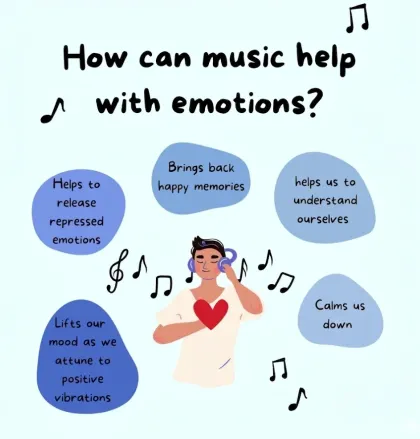
- The benefit of music for mood is that it helps process difficult emotions like sadness.
- Begin with songs that match your mood, such as slow and thoughtful ones. Then switch to happier, uplifting music. This lifts low spirits naturally.
- Music works with different styles. Playing drums or singing together helps even more, but just listening does good too. Music lets you feel emotions through beats, without pretending to be happy.
How Music Helps with Body Boost
Help You with Heart Health
- Music gets you moving, and that's gold for the ticker.
- Dance it out on salsa, hip-hop, or kitchen shuffle and you log aerobic wins: better balance, mobility, coordination. No gear needed; just feet and flow.
- Listening alone tweaks heart rate and BP based on tempo, fast for energy, slow for chill. Blood flows smoother, stress hormones tank, serotonin and endorphins surge. Rutgers docs confirm: tunes make hearts happier, literally.
It decreases Fatigue
- Music will help you to say goodbye to fatigue. According to a study, it has been observed that exciting and relaxing music, according to your personal preference can help to minimize mental fatigue.
Help ease pain and discomfort
- Undoubtedly, music can help individuals feel less discomfort and pain before, during and after surgery.
- Try it the next time your child gets a minor injury. Play some relaxing music and snuggle together for a little TLC and bonding.
Improve cognition
- Structured music lessons can improve language-based reasoning, short-term memory, planning and inhibition.
- It can also improve children's visual and spatial memory, underscoring the benefits of playing a musical instrument.
Checkout some best music schools in India in the blog below!

Why Music Classes Help You Grow
Faster Help for Anxiety
- Music classes use trained teachers to guide you step by step. Research shows they work well for many people.
- For anxiety, you feel better 20-30% quicker. Anxiety before doctor visits drops by half for kids and grown-ups.
Building Social and Recovery Skills
- People with schizophrenia gain friends through group drumming in class. Veterans with PTSD heal by rewriting song words together. Stroke patients speak better faster with melody practice. Kids with autism make connections by clapping to beats.
Mix of Active and Quiet Activities
- Classes blend hands-on fun like playing instruments or singing with calm parts like listening or making your own music. This fits everyone and helps growth in a balanced way.
Everyday Advantages of Music
Better Sleep
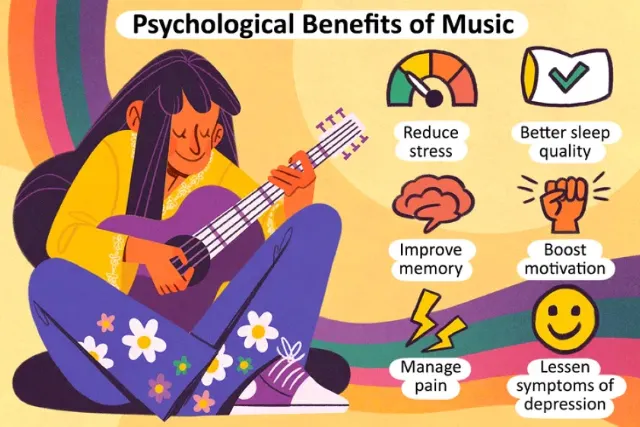
- Music helps you sleep well. Soft lullabies or calm sounds lower stress hormones at bedtime.
- They help you reach deeper sleep stages. People with sleep problems report 30% better rest.
Stronger Immunity
- Lower stress from music means fewer illnesses. It can even increase antibodies after vaccines. This keeps your body healthier overall.
Stronger Social Bonds
- Music brings people together. Singing in a choir feels good without alcohol.
- Community music events reduce loneliness, especially for older adults. Spiritual songs or chants lift your spirit, in church or alone.
Simple Steps to Add Music to Your Life
- If you really want to understand the benefits of music, make music part of your day. Choose energizing songs for morning coffee, calm ones for lunch, and soft sounds to relax at night. Jazz in the evening helps you sleep.
- Join online music classes. It welcomes all ages, no tryouts needed. It builds friendships and strengthens bonds. Whether you want to sway to classic songs or western songs, check Spardha School of Music for online classes.
Care for Body and Mind Now
Now is the time to value your body and mind. Music brings calm, strength, and joy every day. If you are a parent, consider classes for your children to build mental peace. They improve focus, reduce stress, and spark creativity for a brighter future.
Spardha School of Music helps young adults and kids with classes like Piano Online Classes, Guitar Online Classes, Tabla Online Classes, Violin Online Classes, Western Vocals, Carnatic Vocals, Hindustani Vocals, and Bollywood Dance. These live sessions nurture skills, confidence, and well-being from home, with graded certifications.
Frequently Asked Questions
What are the main benefits of music for health?
Music lowers stress, improves mood, boosts memory, helps improve sleep quality, and supports heart health. It can also help manage mental health conditions such as anxiety and depression through music therapy.
Is music therapy suitable for everyone?
Yes, music therapy can benefit people of all ages, from children with autism to adults recovering from strokes. The benefits of music therapy make it suitable for a wide range of needs, and sessions are typically safe and tailored to individual requirements.
How can parents help kids with music classes?
Parents can enroll their children in structured music programs such as those offered by Spardha School of Music. Courses in piano, guitar, vocals, and other disciplines help improve focus, confidence, creativity, and overall well-being through personalized lessons and certifications.
Where can I find music classes near me?
You can explore local choirs, music academies, and community centers for in-person classes. If you prefer learning from home, Spardha School of Music offers online classes worldwide in vocals, instruments, and dance for both children and adults.