Table of Contents
If you have just picked up your first guitar, you already know the feeling: sore fingertips, slow chord changes, and fingers that refuse to cooperate. The good news is that dedicated finger exercises can transform your playing faster than you might think. Consistent finger exercises build the strength, independence, and muscle memory your hands need to move fluently across the fretboard.
Guitar is widely considered one of the more physically demanding instruments to learn, especially for adults. Unlike a piano key that responds to any touch, a guitar string requires the right amount of pressure in exactly the right place. That balance between effort and efficiency is something no amount of passive listening can teach. It must be trained through deliberate practice.
The four beginner guitar finger exercises in this guide cover everything from basic fretting technique to coordination and speed. Each one is designed to work on a specific area of development common to new players. Work through them daily, even for just ten to fifteen minutes, and you will notice real progress within weeks.
One rule applies to every exercise in this guide: if it hurts, stop. Pain is your body signalling poor technique or overexertion, not a sign of hard work. Always warm up your hands first, keep movements relaxed, and apply only as much pressure as the string actually needs.
Exercises at a Glance
Take the below quiz to know if you are getting better at playing guitar!

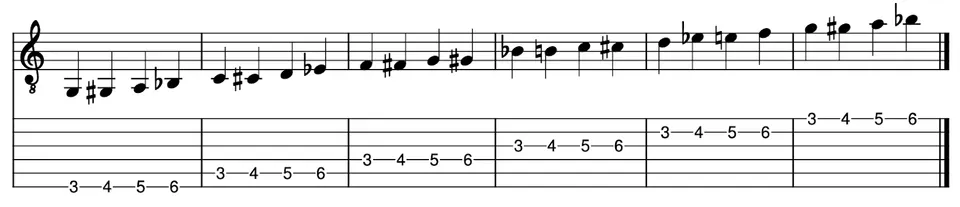
Exercise 1: The Spider Exercise (Frets 5 to 8)
The Spider Exercise is the foundation of most finger exercises for guitar. It trains all four fretting fingers to move independently across all six strings in a logical, crawling pattern.
How to Do It
Variations to Practice
Mastering this single exercise across all its variations gives you most of what you need for clean fretting technique. It is one of the most versatile finger exercises in a guitarist's toolkit.
Exercise 2: Finger Stretching Exercises for Guitar
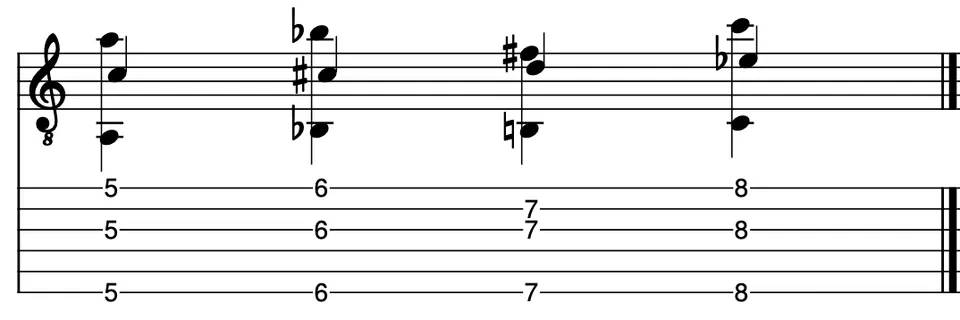
Flexibility is just as important as strength. These finger stretching exercises for guitar are specifically designed to increase the reach and independence of each finger, especially the ring finger, which is the most naturally restricted for almost all players.
How to Do It
Hold frets 5, 6, 7, and 8 on the G string (3rd string) lightly with all four fingers. While keeping the other three fingers in place, stretch your index finger up to the 6th string and then down to the 1st string. Hold each position for four counts. Repeat with each finger in turn.
Stretch Range by Finger
These finger exercises for stretching should never cause pain. Gentle tension is fine; sharp or burning discomfort means you need to ease off immediately.
Learn how to read guitar tabs and staff notation from the blog below!

Exercise 3: Hammer-On (Frets 3 to 6)
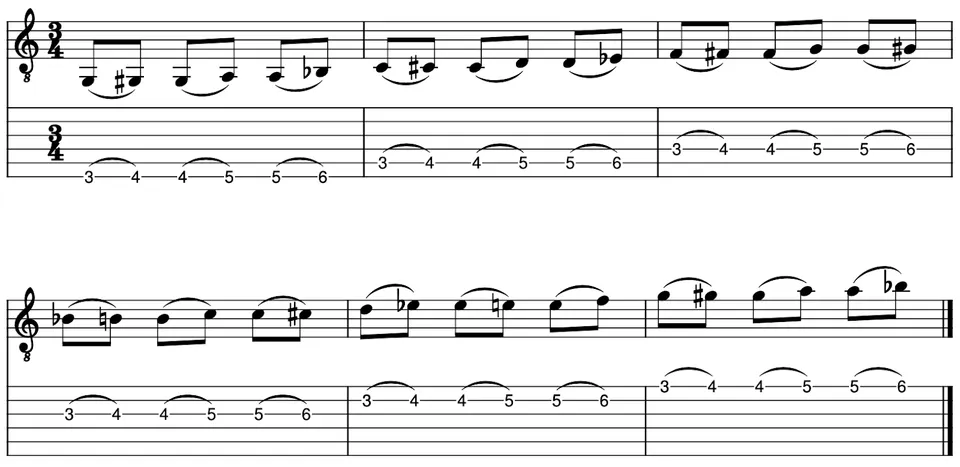
Hammer-ons are a core guitar technique where you sound a note purely by tapping a finger firmly onto the fret without using the pick. This makes them an excellent finger exercise for developing finger strength, coordination, and fretboard efficiency all at once.
How to Do It
Work across frets 3 to 6, using your index, middle, ring, and little fingers. Pick the first note of each pair normally, then hammer the second note onto the next fret without picking again.
Variations to Practice
Want to plays blues on guitar? Click on the blog below to know how!

Exercise 4: Advanced Coordination Drill
This is the most demanding of the four beginner guitar finger exercises in this guide. It is best attempted once you have spent a few weeks with the first three and feel comfortable with basic fret movement. If you find you take to the guitar naturally, you can try it earlier.
This drill works on coordination, independence, finger strength, and technique all at the same time. It is the kind of finger exercise that, once mastered, makes everything else on the guitar feel more manageable.
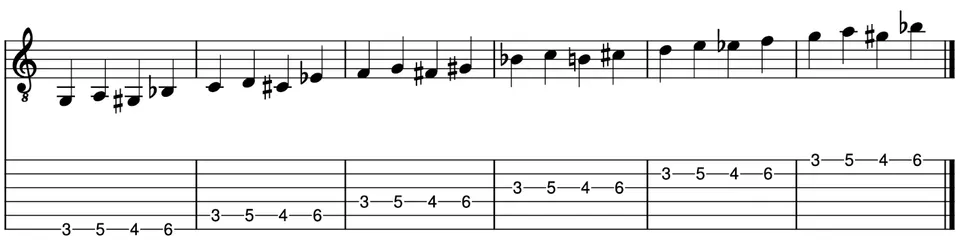
Progression Guide
Progress is gradual with this type of finger exercise. Track your metronome speed week on week. Even 4 to 8 bpm of improvement per week adds up quickly over a few months.
Checkout the key differences between acoustic and electric guitar in the blog below!

Learn Guitar the Right Way
Technical exercises are most effective when they are part of a structured learning journey. At Spardha School of Music, online guitar lessons are designed to give students exactly that: a balance of technique, theory, and real music from the very beginning.
Spardha's experienced guitar teachers guide students through the right finger exercises, exercises for technique, and beginner repertoire at a pace that works for them. Whether you are a complete beginner or someone who has played on and off for years, lessons are tailored to where you are right now.
Learning an instrument without guidance often means ingraining bad habits early, habits that can take much longer to unlearn than the original technique would have taken to learn correctly. A teacher can catch issues with your posture, finger placement, and pressure control before they become persistent problems.
Spardha School of Music offers flexible scheduling and one-on-one attention for students across age groups. If you want your daily practice to actually pay off, structured lessons are the fastest path forward.
Conclusion
Progress on the guitar is not about talent. It is about the quality of your practice. These four finger exercises, worked through consistently each day, will build the foundation every guitarist needs: strength, flexibility, independence, and coordination.
Think of playing songs as chopping a tree and think of these finger exercises as sharpening the axe. Technical practice does not always feel as exciting as running through your favourite riff, but it is what makes everything else possible.
Keep sessions short, stay consistent, and never push through pain. If something hurts, check your technique before continuing. The goal is to build habits your hands will remember for life.
Frequently Asked Questions
How can I strengthen my fingers for guitar?
Practise finger exercises directly on the guitar every day. The Spider Exercise and hammer-on drills are the most effective starting points for building fretting strength.
Do finger exercisers work for guitar?
Grip tools offer some general finger strength benefits but cannot replace time spent on the instrument. Guitar requires specific muscle memory that only develops through actual playing.
How to make guitar easier on fingers?
Use lighter gauge strings, get your guitar properly set up to lower the action, and press strings as close to the fret as possible to reduce the pressure needed.
How can I improve my finger flexibility?
Practise the stretching drill in Exercise 2 daily, holding each position for a few counts. Be patient with the ring finger as it has naturally limited reach due to shared tendons.