
Table of Contents
The harmonium is one of the most soulful and expressive instruments ever created. It has been an important part of Indian music for centuries and is used in many different forms of music such as classical performances, bhajans, ghazals, Qawwalis and folk songs. The harmonium creates rich, mellow sounds that resonate beautifully when played alongside both individual voices and in solo performance settings. In India, there are many people who are very fond of playing these instruments. So if you are a beginner, and want to know everything about the Harmonium instrument, this guide is for you. Here we have highlighted what are the different parts of the harmonium, its type, and a few tips for playing the instrument. Let’s begin.
What Is a Harmonium?
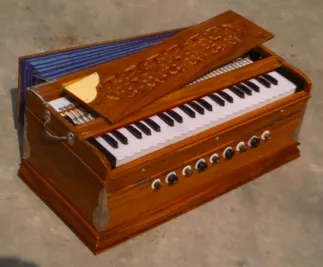
The harmonium musical instrument is a free-reed keyboard instrument that produces sound when air passes through metal reeds. It was introduced by European missionaries in India during the 19th Century. From there, it became one of the most celebrated instruments across the country. In addition, there are many forms where harmonium Indian instrument is used, they are:
- Bhajans & kirtans
- Indian classical music
- Sufi qawwali
- Bollywood music
- Folk performances
- Meditation & spiritual chanting
Understanding Different Parts of the Harmonium Instruments
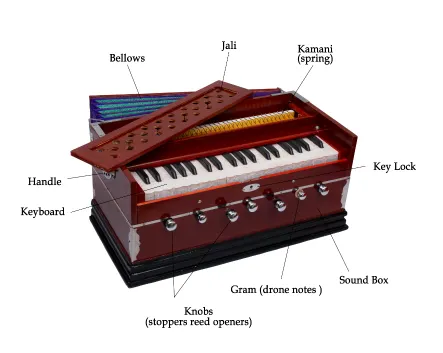
For beginners, before playing harmonium instruments, it is important to be aware of some essential parts of the instruments. Here are some of those:
Check out this blog for easy musical instruments to learn at any age:

Different Harmonium Types
When you’re planning to buy the best Harmonium instruments in India, understanding their types will allow you to make an informed decision, according to your requirements.
1. Standard Harmonium
- Fixed body
- These harmonium types are ideal for home practice and teaching
- Produces stable sound
- It is one of the most affordable harmonium instruments.
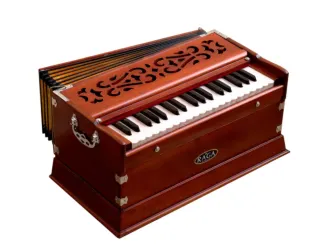
2. Portable / Folding Harmonium
- Collapsible and travel-friendly
- Popular among touring musicians, yogis, and teachers
- Lightweight and compact
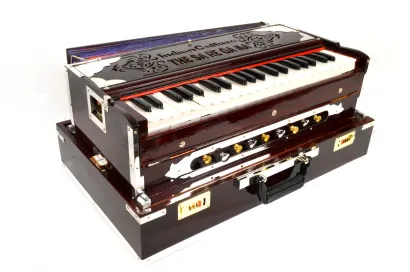
3. Single Reed Harmonium
- Soft, mellow tone
- Perfect for light music, bhajans, and meditation
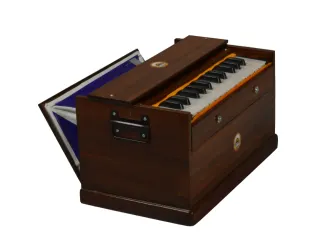
4. Double Reed Harmonium
- Richer, fuller sound
- Used widely in classical music
5. Triple Reed Harmonium
- Powerful, concert-quality sound
- Ideal for professional performances
6. Coupler Harmonium
- This type of harmonium instrument produces resonance and depth
- Helps beginners sound fuller even with simple notes
Explore some best traditional musical instruments in the blog below!

What to Keep in Mind When You Start Learning Harmonium
Patience, perseverance and lots of practice are things that you will need when learning how to play any instrument, including harmoniums. Thus, as a beginner, here are the important things you should keep in mind:
1. Slow Is Fast: Learning how to play music is not a race; it is a journey that you will be on for your entire life. There may be days when all you work on is one note or one exercise repeatedly until it feels comfortable; this takes time.
2. Skill Leads to Consistency: Practicing every day, for an hour or two, will help you grab the techniques easily. Performing finger exercises regularly will build strength in your arms and improve coordination and speed.
3. Know Your Notes: Start by learning the notes in Indian music: Sa Re Ga Ma Pa Dha Ni Sa and the notes in Western music: C D E F G A B C. This will give you a solid foundation on which to build your knowledge of ragas, melodies and keyboard patterns.
4. Get to Know Your Instrument: You should spend some time learning how your harmonium instrument works by studying the parts of the harmonium: bellows, reeds, stops, keys and air flow.
5. Have the Right Posture: You need to sit up straight with both feet flat on the floor so that you can breathe easily. Maintaining the correct posture will prevent physical fatigue during practice sessions as well as make it easier to control your instrument.
6. Have a Steady Hand: When you start playing a harmonium instrument, practice slow, controlled motions while keeping your tempo steady. This will help ensure that you get clean, accurate sounds from your instrument.
7. Focus on One Concept at a Time: Do not rush through lessons; take your time mastering each lesson before going onto the next. Repeat motions and practices until they become habitual and natural to you.
How to Choose the Best Harmonium for Beginners
When going to buy the harmonium instrument for the first time, here are a few factors to consider:
- Choose the Right Number of Reeds: Single reeds for beginners, double reeds for classical learners.
- Check Key Action: The keys should feel smooth, not too hard or too loose.
- Test Bellow Smoothness: Good bellows create even airflow and better sound.
- Look for Coupler and Stop Options: These features improve sound control for learners.
- Consider Portability: Folding harmoniums are great if you travel often.
- Budget Wisely: A good beginner harmonium ranges between ₹7,000–₹20,000 depending on build and sound quality.
To understand different musical instruments, read the blog below!

Wrapping Up
If you’re a beginner, now you must have got a basic understanding of harmonium instruments. So, if you want to learn to play the harmonium, get personalised guidance from Spardha School of Music.
At Spardha, learning the harmonium Indian instrument is not just about pressing keys, it’s about building a deep musical foundation. You get:
- Certified and experienced instructors
- Live 1:1 or small-group online sessions
- Beginner to advanced-level courses
- Flexible timings for students and working professionals
- Progress tracking, assignments, and performance opportunities
- A supportive and enjoyable learning experience
Start your harmonium journey today with expert mentors and discover the true beauty of music with Spardha.
Frequently Asked Questions
1. Is the harmonium easy to learn for beginners?
Yes! The harmonium instrument is considered one of the easiest Indian musical instruments for beginners. With consistent practice and proper guidance, you can start playing basic melodies within a few weeks.
2. How long does it take to learn harmonium?
Basic playing takes 2–3 months, while mastering scales, ragas, and compositions may take 1–2 years. Progress depends on practice frequency, correct techniques, and structured learning.
3. What type of harmonium is best for beginners?
A single-reed or double-reed non-folding harmonium is ideal for beginners. It offers stable keys, smooth airflow, and consistent sound—perfect for learning fundamentals.
4. Do I need a musical background to learn harmonium?
Not at all! The harmonium musical instrument is beginner-friendly and suitable even for those with zero music knowledge. You only need patience, curiosity, and consistent practice.