Table of Contents
India's love for music can be seen in its booming industry to individual passions and even fans following. Think of the soul-stirring ragas from the past or the catchy Bollywood beats we all hum today. Music isn't just something we enjoy at weddings or festivals; it's part of who we are. Right now, music education in India is changing fast. It's moving away from being just a family tradition or weekend hobby. More people see it as a real skill to learn, a way to build a career, and something every child should have in school.
Whether you're a parent thinking about classes for your kid or someone dreaming of making music your job, this is an exciting time.
In this blog, we'll walk through how music education got started, where it stands today, the roadblocks it faces, and all the doors it's opening. We'll keep it real and simple about why the importance of music in education can't be ignored anymore, and how music education online is making it possible for anyone, anywhere.
The Roots of Music Education in India
Long ago, a young student would leave home to live with a guru(teacher), sitting cross-legged for hours, just listening and copying every note. That's the guru-shishya tradition, the heart of how music was taught in India for centuries.
No big classrooms or tests. It was all about patience, daily practice called riyaz, and that special bond between teacher and student.
Things began to shift in the 20th century. British-style schools added music as an extra subject. Post-independence, places like the Sangeet Natak Academy and music colleges in cities like Chennai and Kolkata started giving diplomas.
Suddenly, you could learn veena or tabla with books, exams, and certificates. This made room for more students, not just those born into music families.
Today, it's a beautiful mix. You can still find a teacher teaching flute under a tree, or sign up for a degree at a university. And with music education online, even kids in small towns can learn guitar from a Mumbai expert.
This blend keeps our roots strong while opening new paths. Studies show kids who start early build better listening skills and discipline, which helps in school and life.
Learn why enrolling for online or offline music classes is essential in the blog below!

The Present State of Music Education in India
- Step into a music class today, and you'll see a world of options. Music schools like Spardha School of Music teach everything from piano to music production.
- Students pick from classical training (like learning alaap in khayal), Western styles (pop vocals or drums), instruments (guitar to piano), or tech skills like sound mixing.
- The importance of music in education is sinking in with schools reporting kids in music groups score higher in math and languages because it sharpens focus.
- But not everywhere is equal. Urban areas have shiny studios; rural spots make do with basic harmonium. Music education online is bridging that. Platforms grew 40% post-pandemic, letting a student from any corner of the world learn violin live.
- It's structured now: beginner levels, mid-stage practice, final performances. Parents love it for building confidence in shy kids.
Major Changes Shaping the Future of Music Education
The next five years look bright. Policies, tech, and jobs are aligning.
1. The Impact of NEP 2020
- NEP 2020 says music is core, not extra. From Class 1, kids learn folk songs for rhythm, building to compositions by high school.
- It stresses creativity (making your own tune), teamwork (group singing), and our heritage (Baul or Qawwali). Schools must hire trained teachers, demand up 50%. Pilots in 1,000 schools show happier, sharper kids.
2. Growth of the Media and Entertainment Industry
- Bollywood, OTT like Netflix, and Spotify need talent.
- Live events hit 10,000 yearly. The music market grows 15% annually to ₹2,000 crore. This pulls students to production courses, think scoring for web series.
3. Expansion Beyond Metro Cities
- Tier 2 spots like Lucknow or Bhubaneswar see 300% more classes. Local fests inspire kids.
- Middle-class families invest ₹10,000 yearly per child.
4. Technology and Accessibility
- 5G means seamless music education online. Apps record practice, give feedback. Cost? ₹1,000/month vs ₹5,000 offline.
5. New Career Opportunities in Music Education
- Teachers for NEP, online tutors, researchers blending AI with ragas, sound trainers for films, event planners for gigs, data experts tracking hits.
Why Music Education Matters Today
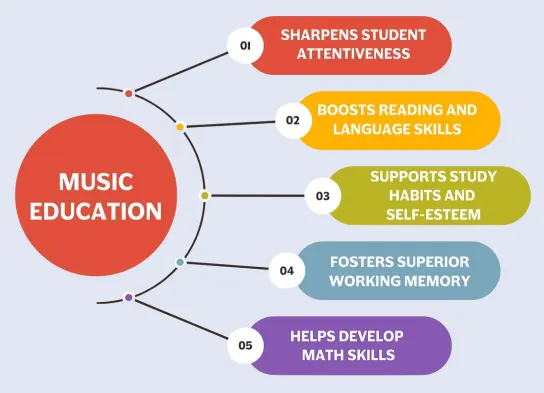
Music education is no longer seen as just an additional activity after school hours. It plays a meaningful role in shaping how individuals think, feel, and grow. From improving focus to building emotional strength, music supports overall development in a balanced and natural way.
Let us understand its impact step by step.
Music Helps Reduce Stress and Improve Emotional Balance
- One of the most immediate benefits of music is its ability to calm the mind. When a person listens to or plays music, the body begins to relax. Studies suggest that spending even 20 to 30 minutes with music can significantly lower stress levels.
- For children, this means better emotional control. A child who engages with music regularly often feels more relaxed and less overwhelmed. Whether it is humming a tune, playing an instrument, or simply listening to soothing sounds, music creates a sense of comfort and stability.
Music Strengthens Memory and Improves Focus
- Music has a strong connection with memory. Learning a song involves remembering lyrics, notes, and rhythm at the same time.
- This process strengthens working memory, which is also used in subjects like mathematics and language.
Music Encourages Creativity and Independent Thinking
- Creativity is an essential skill in today’s world, and music plays a key role in developing it. When students experiment with melodies or create their own variations, they learn to think beyond fixed patterns.
- This creative thinking is not limited to music alone. It shows in other areas such as writing, problem-solving, and project work.
- Students who engage in music often bring fresh ideas and perspectives into their learning process.
Music Builds Discipline and Patience
- Learning music requires consistent practice. It is a gradual process where improvement comes with time and effort. This helps students understand the value of patience and discipline.
- When a student practices regularly, they develop a routine. They learn to stay committed even when progress feels slow. This mindset becomes useful in other areas of life, including academics and personal goals.
Music Strengthens Social Skills and Teamwork
- Music often involves group activities such as singing in a choir or playing in a band. These experiences help students learn how to work together.
- They understand the importance of listening, coordination, and mutual respect. Each individual contributes to a larger outcome, creating a sense of belonging.
- Schools with active music programs often observe better social interaction among students. Group music activities encourage friendships and reduce feelings of isolation.
Music Supports Overall Development
Music education contributes to complete personal growth. It supports mental sharpness, emotional well-being, and social confidence.
Students involved in music often show:
- Better academic performance
- Improved emotional control
- Stronger communication skills
- Higher confidence levels.
A Balanced Approach to Growth
- The importance of music in education lies in its ability to support both the mind and emotions together. It is not limited to learning an instrument or singing correctly. It is about developing skills that are useful in every stage of life.
- Music education creates a strong foundation for growth. It helps individuals become more focused, expressive, and confident.
Career Opportunities in the Music Field
Music education opens doors to exciting jobs where you turn passion into paychecks. Here's a clear table with key roles, what they involve, and salary ranges pulled from real data on sites like AmbitionBox (averages for India in 2026, entry to mid-level, depending on experience, city, and skills).
Note: Salary from Ambition Box.
Explore the career paths you can take in music industry in the blog below!

The Role of Institutions in Shaping Future Musicians
Good schools and academies are like launchpads as they give you tools, teachers, and chances to shine. They turn "I like music" into "I'm ready for the world." Structured lessons mean step-by-step progress: basics first and ending with real performances. Expert instructors understand your strengths, and push you to perform.
This is where Spardha School of Music comes in. Based in Pune but reaching everywhere online, we offer live one-on-one classes in piano, guitar, tabla, violin, Western vocals, Carnatic vocals, Hindustani vocals, and even Bollywood dance. Kids start with simple songs to build love for music; adults pick up skills for hobbies or side hustles.
Courses at Spardha School of Music
Instrumental Courses
These courses focus on learning musical instruments with structured training from beginner to advanced levels.
Keyboard & Piano
String Instruments
Wind Instruments
Percussion Instruments
Vocal Courses
These courses are designed for singing across Indian and global styles.
Indian Classical Vocals
Western & Contemporary Vocals
- Western Vocals (Pop, Rock, Jazz, Blues)
Film & Popular Music Vocals
Learn some life changing benefits of learning music in the blog below!

Every class is personalised, your teacher adapts to your learning pace, tracks your progress consistently, and prepares you thoroughly for certifications. Parents have seen a remarkable improvement in their children's focus and enthusiasm, while young professionals have been able to secure opportunities much faster
It's affordable, flexible, and fun, proving institutions can spark lifelong passion while prepping for real careers. Whether virtual recitals or pro diplomas, we’re here to shape confident creators ready for India's booming music scene.
Final Thoughts
Music education in India is growing strong and full of promise. It's mixing old ways with new tools to help everyone learn. Schools now see music as a key part of growth, not just playtime. Online classes from Spardha School of Music make it easy for kids in villages or busy city homes. If you're a student, start with a simple lesson. Parents, give your child this gift for better focus and fun. Teachers, share your skills in new ways. The beat of music is called join Spardha School of Music courses and find your own rhythm.
Frequently Asked Questions
Is music education good for children's brain growth?
Yes, music education helps improve memory, concentration, creativity, and problem-solving skills. Studies have also shown that children who learn music often perform better in academic subjects and cognitive tasks.
What jobs can I get after music classes?
Music education can open doors to careers such as singer, music teacher, songwriter, composer, sound engineer, music producer, and performer. Opportunities are available across films, live events, education, and the entertainment industry.
How do online music lessons work?
Online music lessons are conducted through live video sessions with experienced instructors. Students learn from home, receive guided practice assignments, get regular feedback, and can progress through structured levels with certifications.
Why do schools need music now?
Music helps reduce stress, encourages teamwork, improves emotional well-being, and supports overall development. It creates a positive learning environment that helps students stay engaged, confident, and socially connected.