
Table of Contents
The ukulele is one of the most beginner-friendly instruments around. It's compact, affordable, and a lot of fun to play. But even a great ukulele sounds off if its strings are wrong for the instrument or if it's not properly tuned.
Choosing the right ukulele strings makes a real difference to how your instrument sounds and how comfortable it is to play. And once you have the right ukulele strings in place, knowing how to tune them correctly is what takes your playing from rough to musical.
This guide covers string types, sizes, standard tuning, and practical tips to keep your ukulele sounding its best.
Check out the blog below for the guide to buying your first ukulele

Types of Ukulele Strings
Ukulele strings come in several materials, and each has a different feel and sound. Here's a clear comparison:
Nylon strings are the most widely used on ukuleles. They produce a soft, warm tone and are gentle on fingers, which makes them a popular first choice. They hold tuning well and are easy to find at most music stores.
Nylgut strings were developed to recreate the feel of traditional gut strings without the drawbacks. They have a slightly brighter tone than nylon and are a good step up once you've built some experience.
Fluorocarbon strings are the preferred choice for many experienced players. They produce a clear, bright tone and hold up well against humidity and temperature changes. They're priced higher than nylon or nylgut, but they last longer and stay in tune more reliably.
Steel strings are not recommended for standard ukuleles. The tension they create is too high for most ukulele bodies and can cause structural damage over time. They're used mainly on hybrid instruments specifically built to handle that tension.
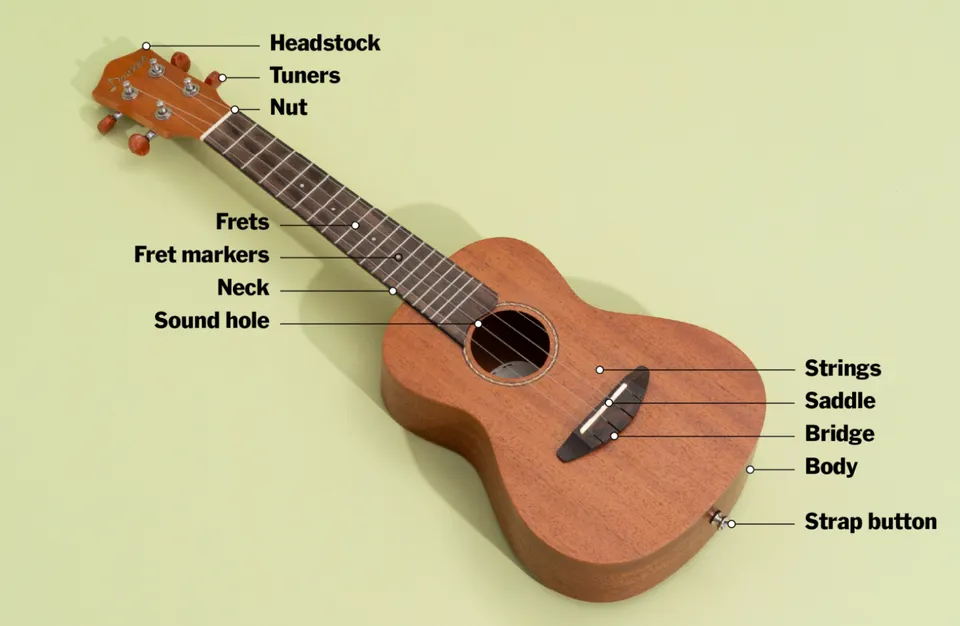
String Gauges by Ukulele Size
Ukulele strings are not one-size-fits-all. The right gauge depends on the size of your instrument. Using the wrong gauge affects both tone and playability.
The soprano is the most traditional ukulele size. Its lighter strings produce the bright, cheerful tone most people associate with the instrument.
The concert ukulele is slightly larger and uses medium gauge strings. It offers a fuller sound while still being easy to handle, making it a popular choice for players who have moved past the beginner stage.
The tenor ukulele has a noticeably deeper sound. Heavier gauge strings give it more resonance and volume, which is useful for solo playing or performances.
The baritone ukulele is the largest in the family and uses the heaviest strings. Its tuning is also different from the other sizes, which is covered in the next section.
Standard Ukulele Tuning: G-C-E-A Explained
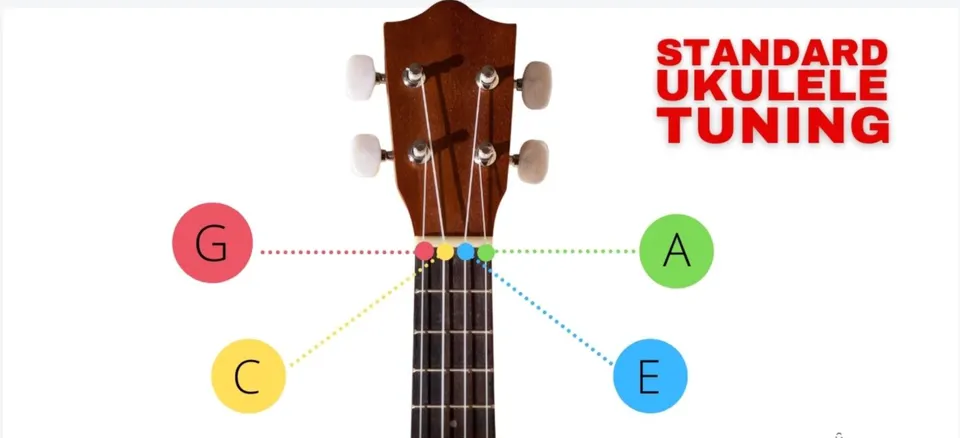
The standard tuning for soprano, concert, and tenor ukuleles is G-C-E-A. Here's what each string is and where it sits:
One thing that surprises many beginners is that the G string on a standard ukulele is tuned higher than the C string. This is called re-entrant tuning, and it gives the ukulele its characteristic bright, jangly sound.
Some players prefer low G tuning, where the G string is tuned an octave lower. This creates a more linear string arrangement, similar to a guitar, and gives the instrument a warmer, deeper tone. Both are valid choices depending on the style you play.
Baritone ukulele tuning is different. Baritone ukulele strings are tuned D-G-B-E, which is the same as the top four strings of a guitar. If you already play guitar, this makes the baritone an easy instrument to pick up.
How to Tune a Ukulele
There are three common ways to tune your strings:
By ear — This takes practice and a good musical ear. You can tune to a reference note from a piano, another instrument, or an online tone generator. It's a useful skill to develop over time.
With a clip-on ukulele tuner — A clip-on ukulele tuner attaches to the headstock of your ukulele and reads the vibration directly from the instrument. It works well even in noisy environments. This is the most accurate and beginner-friendly option.
With a tuning app — Several free apps work reliably for this purpose. They use your phone's microphone to detect pitch. They're a good backup when you don't have a physical tuner on hand.
The clip-on tuner is the most recommended option for regular use. It's quick, accurate, and doesn't require silence around you to work properly. As a beginner, you can use the online ukulele tuner available on the Spardha School of Music website as a free resource. It works like a tuning app and uses the microphone to detect pitch.
Learn 5 quick and simple strumming pattern on guitar and ukulele in the blog below!

Tips to Keep Your Ukulele Strings in Good Shape
Even good strings go out of tune if you don't maintain them. Here are a few habits worth building:
New ukulele strings take time to settle. When you put on a fresh set, they'll go out of tune frequently for the first few days. Gently pulling each string away from the fretboard after tuning helps speed up this process. After a few sessions, they'll stabilise.
Humidity and temperature affect all stringed instruments. If you store your ukulele in a place that gets very hot, cold, or damp, the strings and the body of the instrument will both be affected. A case with a small humidifier pack helps maintain a consistent environment.
Learn Ukulele with Spardha School of Music
If you're learning ukulele or thinking about starting, having a good teacher makes a big difference. Understanding which ukulele strings suit your instrument, the basics of tuning, and how to actually play them are all things that become clearer with guidance.
Spardha School of Music offers live 1:1 online ukulele lessons with friendly and professional teachers. Whether you’re a beginner or an intermediate player, Spardha courses match your level and pace of learning, and you can learn right from your home. The curriculum covers tuning, chord work, strumming patterns, and repertoire, all at a pace that suits you.
Book a free trial ukulele lesson at Spardha School of Music
Learn more about easy musical instruments to learn at any age in the blog below!

Conclusion
Ukulele strings are one of the most important parts of how your instrument sounds and plays. Choosing the right material and gauge for your ukulele size sets a strong foundation. Keeping them properly tuned, with a clip-on tuner or a reliable app, is what makes every practice session worthwhile. You can also use the online ukulele tuner available on the Spardha School of Music website for free to tune your ukulele perfectly.
Whether you're just starting out or looking to improve, learning to care for your strings and keep them in tune will make a noticeable difference in your playing.
Frequently Asked Questions
1. What are the 4 strings of the ukulele?
The four ukulele strings are tuned to G, C, E, and A in standard tuning, from the top string to the bottom.
2. What type of strings are best for ukulele?
Nylon and fluorocarbon ukulele strings are the most widely recommended. Nylon suits beginners well, while fluorocarbon offers better tone and durability for more experienced players.
3. What is the string 1 2 3 4 on a ukulele?
String 1 is A (bottom), string 2 is E, string 3 is C, and string 4 is G (top). The standard tuning from string 4 to string 1 is G-C-E-A.
4. Does a ukulele have 4 or 6 strings?
A standard ukulele has 4 strings. Some specialty models have 6 or 8 strings, but these are less common and not used in standard ukulele learning.