Table of Contents
When we think of music, there are many different types of musical expressions that we can choose from to connect with people emotionally and spiritually. But one type of musical expression that has a deep emotional and poetic resonance with the hearts of many in South Asian Music and Globally is ghazal. You're probably familiar with this musical form whether it's when you've listened to a beautiful performance on TV or at a family function or through a late-night session on a set of headphones. There is something so powerful about the ghazal that lingers in the hearts of many.
If you're asking yourself, "What is ghazal?" and why it evokes such strong feelings in you, you came to the right place. We will discuss the ghazal definition and when it has its origins along with the ghazal's evolution through time, as well as honour some of the greatest ghazal artists (and some of those, whose ghazals, have contributed significantly to India's cultural heartbeat), so let us begin, slowly, as it should be.
Ghazal Definition: More Than Just a Song
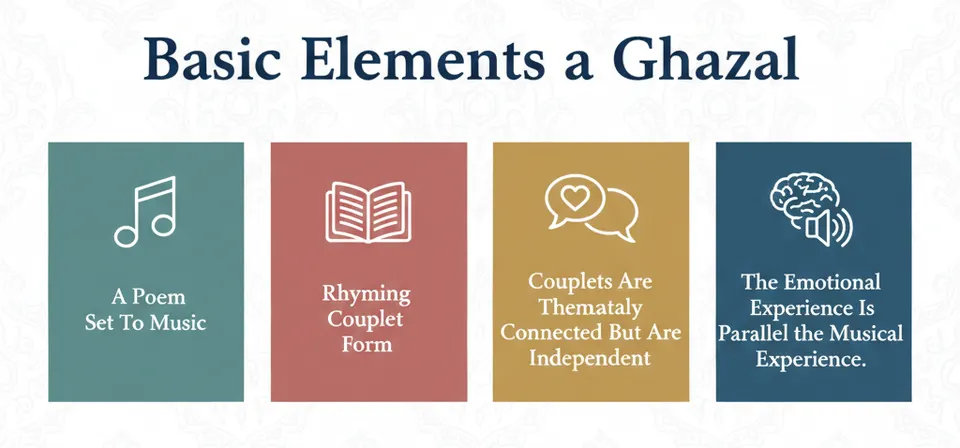
A Ghazal is a song that has a deeper meaning than its title implies. A ghazal is a type of lyric poetry that expresses love and longing, loss and separation, and spiritual yearning and self-examination. The emotional impact of a ghazal can be very powerful. The lyrics are arranged in such a way that the melodies come to life when they are sung.
To better appreciate the meaning of a Ghazal, we can think of it this way: A ghazal is a piece of poetry written to express the strongest emotions of our soul. Every couplet within a ghazal is a complete thought or idea, and every couplet shares themes that connect them to one another. Because of this arrangement, the Ghazal has layers of meaning and depth that can be experienced musically.
Ghazal Origin and Early History
To understand what is ghazal, we need to go back in time. The ghazal origin is rooted in ancient Arabic poetry. Historians trace its beginnings to the 6th century in Arabia, where poets wrote short, expressive verses about love and longing. These verses later found their way into Persian literature, where the ghazal as a poetic form truly took shape.
From Persian lands, the ghazal travelled through cultural exchange to South Asia, especially during the medieval period, with the spread of Persian language and culture. In India, the ghazal found fertile ground, blending with local languages like Urdu, Hindi, and regional dialects, and soon became a cherished form of poetic singing.
So although the music and language may vary, the emotional foundation of a ghazal, love, longing, loss, spiritual reflection, remains universal.
Check out some top singers in India in the blog below!

The Evolution of Ghazal Through Time
Originally brought to the Indian subcontinent from Persia, the ghazal saw a slow evolution from poetry to musical compositions. Melodies of ghazals were developed, performed, recorded, and widely distributed.
1. Classical Ghazal
While in the early years of Indian development, ghazals were most often associated with classical music. Ghazals had very subtle melodies, highly developed rhythmic elements, and were focused heavily on poetry and its emotion.
2. Film Music and Commercial Music
As Indian film developed, there were increasing numbers of ghazal songs being produced for films. This brought an audience that may never have experienced ghazals previously into contact with the melodies of ghazals. Producers of sound tracks for Indian films found ghazal to be a fusion of depth and entertainment.
3. Modern Forms
Ghazal continued to evolve from the late twenty-first century until the twenty-second century. Artists began to create new music genres by mixing classical ghazal structures with modern instruments and vocal styles.
Legendary Ghazal Singers Who Shaped the Form
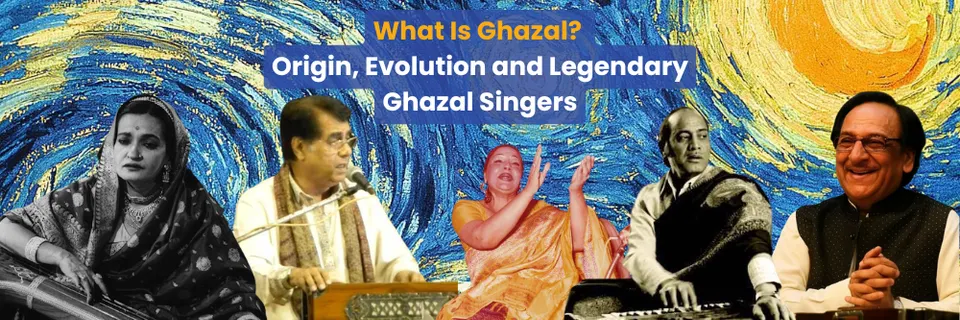
No conversation about ghazal singers is complete without acknowledging the artists who brought this poetic form to life with their voice, depth, and expression. While ghazal has many interpreters, some voices have left such a lasting impact that they define the genre.
Begum Akhtar
Begum Akhtar is frequently referred to as the "Queen of Ghazal". Her vocal talents are characterised by richness, expressiveness, and elegance. While being able to cover a range of musical techniques associated with classical music, Begum Akhtar's voice also possesses a great degree of musical emotion and depth. Her voice has helped to introduce ghazals to new audiences and is an important reference point for anyone who listens to ghazals from a soulful perspective.
Famous Ghazals Sung by Begum Akhtar:
- Ae Mohabbat Tere Anjaam Pe Rona Aya
- Yeh Na Thi Humari Qismat
- Mere Humnafas Mere Humnava
Mehdi Hassan
Mehdi Hassan took ghazal singing to an entirely different level. In addition to his deep, resonant voice, Mehdi Hassan is also known for his musical technique and control of melody. He has created a unique sound that has continued to be a beloved part of music throughout the world. His emotional interpretations of ghazals, as well as his attention to the lyrics of the poetry he sings, have made him a timeless performance artist.
Everlasting Ghazals by Mehdi Hassan:
- Ranjish hi Sahi
- Gair Banke Na Mile
- Ek Bas Tu Hi Nahi
Ghulam Ali
One of the most recognised names in ghazal singing is Ghulam Ali. Ghulam Ali's ease of modulation of his voice and song phrasing creates an entirely new experience for those who are familiar with the musical form. He has been able to take his experiences performing his albums and concerts around the globe and share those experiences with audiences.
Best of Ghulam Ali Ghazals:
- Ye Dil Pagal Dil Mera
- Humko Kisike Ghum ne Mara
- Chupke Chupke Raat Din
Jagjit Singh
Jagjit Singh was able to bring ghazals into the mainstream of contemporary pop and rock music. Jagjit Singh helped to combine traditional ghazals with current types of musical arrangements, giving ghazals an entirely new audience.
Famous Ghazals Sung By Jagjit Singh
- Tum Itna Jo Muskura Rahe Ho
- Hoshwalon Ko Khabar Kya
- Woh Kagaz Ki Kashti
Features of Ghazal
Ghazals are a timeless form of poetic and musical expression known for their emotional depth, lyrical beauty, and structured elegance. Originating in Persian and Urdu literature, ghazals beautifully blend poetry with music, making them deeply expressive and meaningful. Below are the key features that define a ghazal.
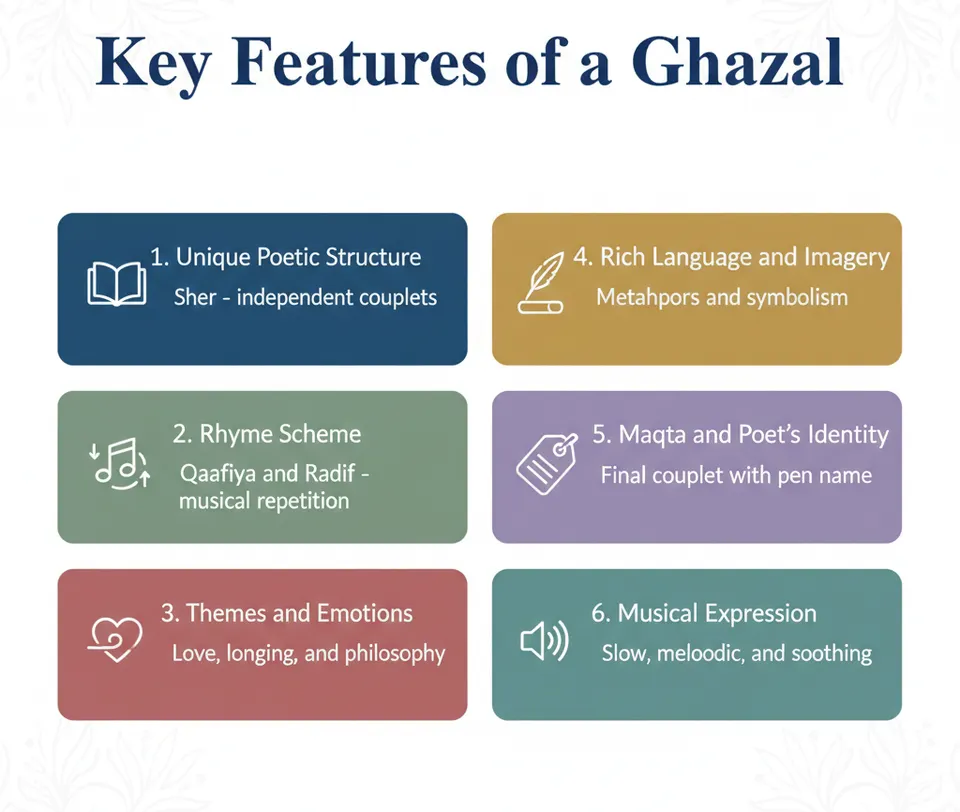
1. Unique Poetic Structure
A ghazal consists of a series of couplets known as Sher that each have their own meaning. Although each couplet stands alone in meaning, all of the couplets are connected by the same sentiment or mood. Because of the independence of each couplet, poets can express multiple emotions within a single ghazal.
2. Rhyme Scheme: Qaafiya and Radif
A significant feature of ghazals is the rhyme pattern in the poetry of a ghazal. The qaafiya is the rhyming word or phrase and the radif is a repeated phrase right after. The repeated use of these words adds to the musicality of the work and, therefore, to the emotional experience of the reader.
3. Themes and Emotions
Ghazals often contain motifs of love, longing, separation, loss, devotion, and philosophical thought. Love in ghazals can be romantic, spiritual, or mystical in nature; however, it often conveys pain and desire with elegant sophistication.
4. Rich Language and Imagery
Ghazals are known for using refined language, metaphor and symbolism throughout the work. For example, common symbols like the beloved, wine, night, moonlight and heart are used as tools to convey extensive feelings in an indirect fashion.
5. Maqta and Poet’s Identity
The final couplet, called the maqta, usually includes the poet’s pen name (takhallus), giving the ghazal a personal touch.
6. Musical Expression
Musically, ghazals are slow, melodic, and soothing, allowing listeners to fully absorb the emotions and meaning of the lyrics.
Checkout some amazing Indian Folk Musicians in the blog below!

Famous Ghazal Songs to Know
There are countless ghazal songs that have moved listeners around the world. Some stand out not just for their musical beauty but for their emotional storytelling.
Here are a few iconic ghazal songs that every lover of the genre should experience:
- “Aaj Jaane Ki Zidd Na Karo” — A timeless classic that captures the pain of separation and the beauty of lingering together.
- “Chupke Chupke Raat Din” — A gentle melody of unspoken love and longing.
- “Hothon Se Chhu Lo Tum” — A poetic plea set to an unforgettable melody.
- “Tum Itna Jo Muskura Rahe Ho” — A reflective song that blends love and introspection.
Final Thoughts
What is ghazal? Ghazal is not only music; it is poetry with the structure of a lyric. It is a romantic expression, pure emotion, and lofty melody that reach into and resonate deeply within the human heart. Ghazal, as an expression of music, poetry, and emotion, originated in antiquity as a poetic form that has continued to change through time and across cultures; however, it still exists today because it expresses a universal human feeling.
Listening to memorable ghazals isn't just about ears hearing sounds; it's also about ears experiencing all those feelings, memories, and feelings of longing and thoughts about life's journey.
Whether you're listening to ghazal for the first time or have been listening to a voice that you love for many years, ghazal certainly exemplifies that the power of music and poetry together is much greater than the words alone. And if this timeless art inspires you to learn music yourself, Spardha School of Music offers the perfect platform to begin or refine your musical journey with expert guidance and structured learning.
Frequently Asked Questions
1. What is ghazal in simple terms?
A ghazal is a poetic form set to music, expressing emotions like love, longing, and introspection through lyrical couplets.
2. How long does it take to learn harmonium?
Legends like Jagjit Singh, Begum Akhtar, Ghulam Ali, and Mehdi Hassan are celebrated Indian ghazal singers.
3. What makes ghazal songs different from other songs?
Ghazal songs focus on poetic expression and emotional depth, with each couplet carrying its own theme yet connected musically.
4. Where did ghazal originate?
The ghazal originated in ancient Arabic poetry and later evolved into Persian and South Asian musical traditions.