Table of Contents
The tabla is just one of many instruments that go along with other kinds of music. The tabla connects with all things around it; for example, it follows the vocalist, assists the dancer, is the foundation for whatever the sitar does, and in the hands of the master, has an entire presence by itself on a stage.
India has provided the world with some of the greatest percussionists in modern history. These artists all spent years studying under well-known gharanas, played on every continent, created new ways of expressing rhythm, and left behind a legacy for future generations of students and listeners.
This blog will write about the most famous tabla players in India: the legends that made tabla history and the great masters that continue the legacy into today.
A Brief Note on the Tabla and Its Gharanas
Before understanding the artists, it helps to understand the framework within which they trained.
The tabla is a paired percussion instrument, the smaller dayan played with the right hand, the larger bayan with the left. Together they produce a range of tones, each with its own name and role within the rhythmic vocabulary known as taal. The instrument is central to Hindustani classical music and appears across genres from classical to semi-classical, folk music , film, and fusion.
Over several centuries, distinct schools of tabla playing emerged across different regions of India. These schools are known as gharanas, and each carries its own compositional tradition, stroke vocabulary, and performing style. The six main gharanas are Delhi, Lucknow, Benares, Farrukhabad, Punjab, and Ajrada. Every tabla player in India traces their training to one of these lineages, and understanding which gharana a musician belongs to gives you a window into how and why they play the way they do.
Ustad Allah Rakha
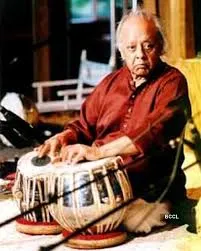
Born in 1919 in Jammu, Ustad Allah Rakha is a widely regarded famous tabla player who placed tabla on the global musical map. His training began under Ustad Kader Bakhsh of the Punjab Gharana, and by his early twenties he had established himself as one of the finest tabla players of his generation.
What set Allah Rakha apart was not just technical command, it was his ability to make the tabla speak to audiences who had no prior exposure to Indian classical music. His long-standing collaboration with sitar maestro Pandit Ravi Shankar through the 1950s and beyond brought Indian rhythm to concert halls in Europe and North America at a time when few Western audiences had encountered anything like it.
He was awarded the Padma Shri in 1977 and the Sangeet Natak Akademi Award in 1982. He established the Allah Rakha Institute of Music in Mumbai and trained hundreds of students, the most celebrated of whom is his son, Zakir Hussain.
Ustad Allah Rakha passed away in February 2000. The tradition he built did not end with him, it lives in every student he taught and every recording he left behind.
Ustad Zakir Hussain
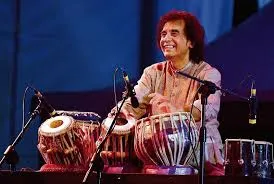
Ustad Zakir Hussain has certainly made the tabla an internationally recognized percussion instrument. Born in Mumbai in 1951, Zakir began learning from his father, Ustad Allah Rakha, at a very young age and by the time he reached the age of seven, he was already performing publicly. At age twelve, he made his professional debut, and from that point onward, he had one of the longest musical careers of any instrumentalist in the world.
Zakir Hussain is a famous tabla player that has a career that spans Hindustani classical music, jazz, orchestral music of Western artists, and a global fusion of all styles. Throughout his career, he has collaborated with many artists including John McLaughlin from Shakti, Mickey Hart from The Grateful Dead, classical musician Charles Correa and a plethora of singers and musicians from Indian classical music from different generations. His four Grammy Awards would be further proof of the diversity and quality of his body of work.
Ustad Ahmed Jan Thirakwa
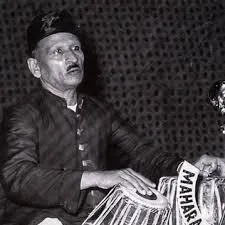
Born in 1891, Ahmed Jan Thirakwa is considered one of the most technically complete famous tabla players of the twentieth century. His training in the Farukhabad Gharana gave him access to a compositional vocabulary of extraordinary depth, and his mastery of fingering technique across multiple gharana styles set him apart even among contemporaries of exceptional ability.
He received the Sangeet Natak Akademi Award for Tabla in 1954 and the Padma Bhushan in 1970, recognition that came after decades of performance at the highest levels of Indian classical music. Musicians who studied his recordings describe a precision and musicality that remains unmatched.
Thirakwa passed away in 1976, but his recordings and the students he trained continue to influence how the Farukhabad style is understood and taught.
Pandit Kishan Maharaj
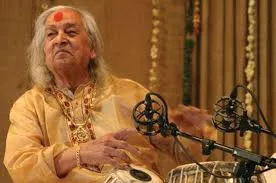
Pandit Kishan Maharaj, born in 1923 in Varanasi, was one of the defining exponents of the Benares Gharana. The Benares style is known for its tonal richness, expressive quality, and the way it serves the music around it — and Kishan Maharaj embodied all of these qualities across a performance career that spanned more than six decades.
He accompanied some of the greatest vocalists and instrumentalists of twentieth-century India, including Ustad Bismillah Khan and Pandit Ravi Shankar. His solo tabla performances were celebrated for their ability to hold audiences without any accompanying instrument, a test very few tabla players pass convincingly.
He received the Padma Shri in 1973, the Sangeet Natak Akademi Award in 1977, and the Padma Vibhushan in 2002. He passed away in 2008, leaving behind a gharana tradition that remains one of the most widely practiced tabla styles in India.
Pandit Anindo Chatterjee
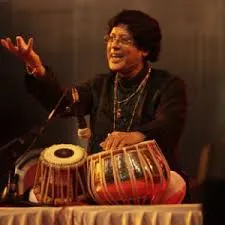
Born in Kolkata in 1954, Pandit Anindo Chatterjee trained under Ustad Afaq Hussain Khan of the Farukhabad Gharana from childhood. He developed a style that combined technical exactness with musical sensitivity, a combination that made him one of the most sought-after accompanists of his generation.
He is a well-known tabla player in India who accompanied virtually every major Hindustani classical musician of his era, including Pandit Ravi Shankar, Ustad Amjad Ali Khan, and Ustad Vilayat Khan. His ability to maintain clarity of stroke at extremely fast tempos became a defining feature of his identity as a performer.
He became the first famous tabla player ever to perform in the House of Commons, London, and performed at Rashtrapati Bhavan during former US President Barack Obama's visit to India in 2010. He received the Sangeet Natak Akademi Award in 2002.
Pandit Swapan Chaudhuri
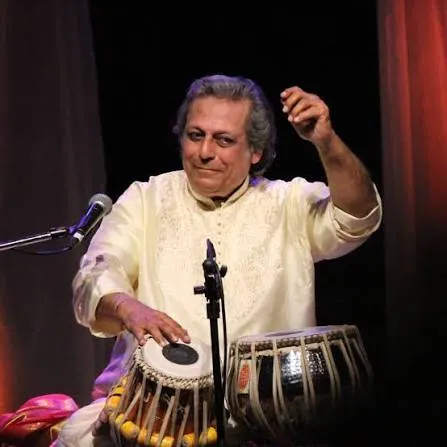
Born in Kolkata in 1945, Pandit Swapan Chaudhuri trained under Pandit Santosh Krishna Biswas in the Lucknow Gharana tradition. The Lucknow style is known for its lyrical quality, its emphasis on tonal variation, and a playing approach that prioritises musical dialogue over display, values that Chaudhuri carried into every performance.
He served as the table master at the Ali Akbar College of Music in California for many years, training several generations of Western students in Hindustani classical tabla. This gave him a unique position as both a performer at the highest level and a teacher with a genuinely international reach.
Pandit Suresh Talwalkar
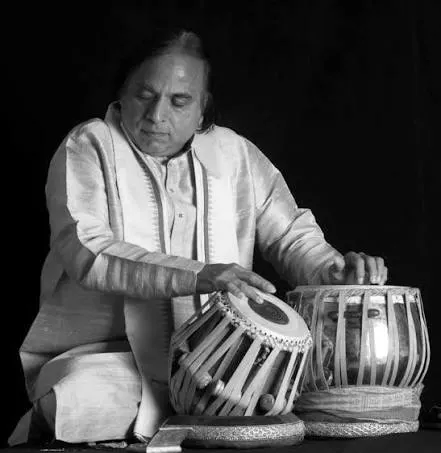
Pandit Suresh Talwalkar is a famous tabla player in India equally celebrated as a performer and as an educator. Belonging to the Farukhabad and Delhi Gharana traditions, he built a reputation for integrating tabla seamlessly with vocal music and dance, an approach that placed the instrument in service of the overall musical experience rather than in competition with it.
He founded the Taalvadya Kendra in Pune, an institution that has trained hundreds of students and produced several accomplished professional tabla players. His work as a teacher has influenced the next generation of Indian percussionists more directly than almost any other living musician in this field.
Pandit Vijay Ghate
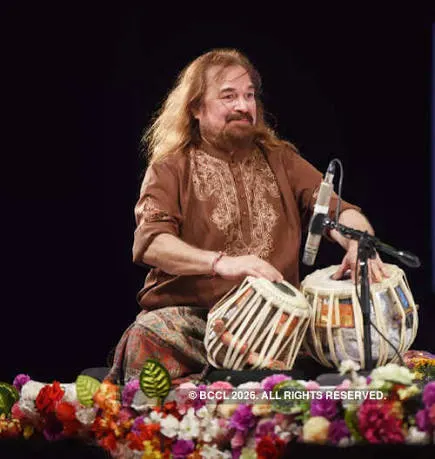
Born in Jabalpur, Pandit Vijay Ghate trained under Pandit Suresh Talwalkar and has become one of the most active and famous tabla player in contemporary Indian classical music. His performances span classical solo recitals, vocal and instrumental accompaniment, and fusion collaborations with musicians from other traditions.
What distinguishes Ghate is adaptability. He plays with equal conviction across styles and contexts — a quality that has made him a consistent presence at major music festivals in India and internationally. He represents the continuity of serious tabla training into the current generation of performers.
Rimpa Siva
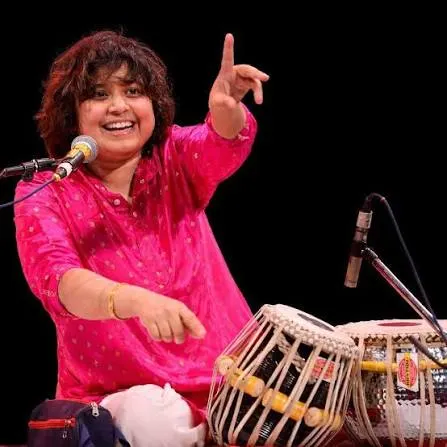
Rimpa Siva is one of the very few women in the world to have built a professional career as a tabla player at the concert performance level. Trained by her father in the Farukhabad Gharana from the age of eight, she developed a playing style of considerable depth and authority.
Her presence in the concert circuit has been significant not just musically but culturally — demonstrating that the tabla, long considered a male-dominated instrument, is equally well-suited to female practitioners who receive proper training. She has performed across India and internationally, earning recognition as a genuine force within the tradition.
Bickram Ghosh
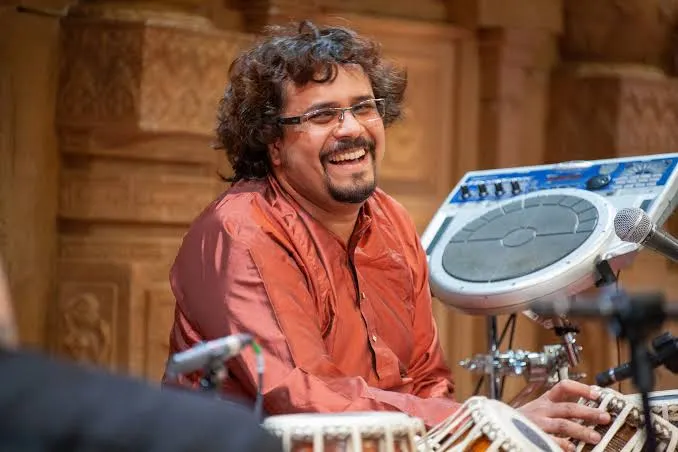
Bickram Ghosh represents a generation of tabla players who grew up in the classical tradition and then extended their work deliberately into fusion and contemporary music. Son of sarod maestro Pandit Sunil Kumar Bose, he trained under Pandit Jnan Prakash Ghosh and built a performance career that includes collaborations with artists from jazz, Western classical, and film music.
He has composed music for films, performed with orchestras across Europe and North America, and built a discography that spans purely classical recordings and genre-crossing collaborations. His work has introduced the tabla to audiences that would not typically attend classical music concerts.
Learn Tabla With Spardha School of Music
The legacy of these extraordinary musicians is not just something to admire from a distance. It is a living tradition, one that any committed student can enter through structured, guided learning.
Spardha School of Music offers live, one-on-one online tabla classes for students of all ages and experience levels. Whether you are a complete beginner picking up the instrument for the first time, a young student working toward formal certification, or an adult learner returning to tabla after years away, we have a structured learning path built around your goals.
Every tabla course at Spardha School of Music is taught by a certified, professionally trained instructor in a personalized format. The curriculum is designed to build technique, develop rhythmic vocabulary, and connect students to the same gharana traditions that produced the masters profiled in this blog. Certification pathways through recognised bodies are available for students who want formal credentials alongside their musical development.
A free trial class is available with no upfront commitment, the most direct way to experience the teaching format and meet an instructor before enrolling.
Frequently Asked Questions
Who is India's well-known tabla player?
Ustad Zakir Hussain has become the world's best-known tabla player. He has won multiple Grammy awards and has received nearly all of the country's top civilian awards including the Padma Vibhushan.
What are all the main gharanas?
There are six primary gharanas of tabla, they are: Delhi, Lucknow, Benares, Farukhabad, Punjab, Ajrada. There are unique compositions and ways to perform within that gharana, all gharanas are therefore extremely different.
Is it easy for a beginner to learn to play the tabla?
When a beginner first begins to practice the tabla, the initial struggle is to understand the proper hand position (on the tabla) and make a clean stroke. A beginner can start to play a clean usable rhythm from just 2 to 3 months of fairly regular practice.