Table of Contents
"Swaras arise from the breath (prana). Without swaras, there can be no song, no dance, and no instrumental music."
— Natya Shastra (Bharat)
Music in India is devotion, discipline, and a way of life. At the heart of Hindustani classical music lies the concept of swaram. Swaram is the soul of every melody, the foundation of every raga, and the breath of every performance. A swaram is more than just a musical note. It is a living vibration that connects the human spirit with the cosmos.
If you've ever wondered what makes Indian classical music so deeply moving, the answer lies in understanding swaram. This guide takes you through the fascinating world of swaras in Indian classical music. You'll learn about their ancient origins, their role in music today, their spiritual meaning, and how beginners can master them.
What is Swaram?
Swaram is the basic unit of sound in Indian classical music. The word comes from a Sanskrit phrase "Swayam Rajate Iti Swaraha," which means "that which shines by itself." Swaram is a sound that is stable, pleasing to the ear, and resonant enough to be called a musical note.
Western notes are treated as fixed frequencies. Swaram in the Indian tradition works differently. It is fluid and deeply connected to the human voice. Each swaram carries a pitch, an emotion (rasa), an expression (bhava), and a spiritual meaning that goes beyond sound.
The seven basic swaras form the building blocks of indian classical music notes:
When you sing these seven Indian classical notes in order, they create the familiar sargam music pattern: Sa Re Ga Ma Pa Dha Ni Sa. This simple sequence is the first lesson every student of Hindustani music learns. It stays with them throughout their musical journey.
Ancient Origins of Swaram
The concept of swaram goes back thousands of years to ancient India. Old texts like Bharata's Natya Shastra (written between 2nd century BCE and 2nd century CE) and Sharangadeva's Sangeet Ratnakara (13th century CE) talk about swaram as more than musical notes. They describe them as divine sounds. They saw swaram as a bridge between the human soul and universal vibrations.
According to these ancient teaching books, each swaram came from the sounds of nature:
- Sa comes from a peacock's cry
- Re comes from a bull's hum
- Ga comes from a goat's bleat
- Ma comes from a heron's call
- Pa comes from a cuckoo's song
- Dha comes from a horse's neigh
- Ni comes from an elephant's trumpet
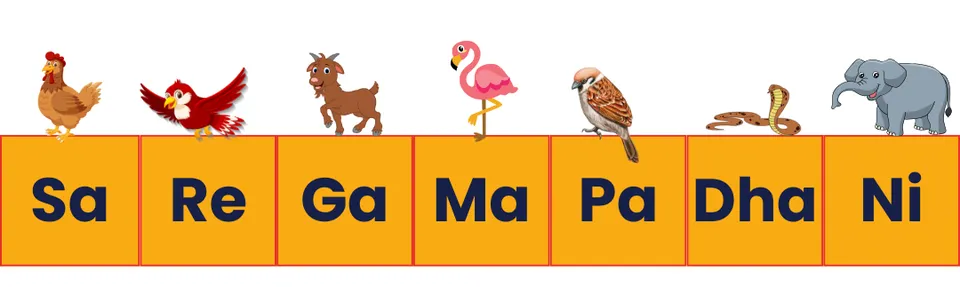
This connection to nature shows the ancient understanding that swaram is woven into the natural world. Each note resonates with a particular frequency found in nature. This creates harmony between music and the universe.
Types of Swar in Music
When you explore the types of swar in music, you find two main categories. These two categories form the complete palette of Hindustani classical music:
1. Shuddha Swaras (Pure Notes)
These are the natural, unchanged notes: Sa, Re, Ga, Ma, Pa, Dha, Ni. They represent the pure form of each swaram. They serve as the reference points in any raga.
Sa (Shadja) and Pa (Pancham) are called Achal Swaras (immovable notes). They never change in pitch. They stay constant across all ragas and scales. They provide stability and grounding to the musical structure.
2. Vikrit Swaras (Altered Notes)
Vikrit swaras are the variations that give Indian music amazing depth and emotional range. They come in two forms:
A. Komal Swaras (Flat Notes)
Four notes can be lowered or flattened: Re, Ga, Dha, and Ni. When you sing these swaras in their Komal form, they create a softer, more thoughtful mood. In notation, Komal swaras have an underline: Ŕe, Ǵa, D́ha, Ńi.
B. Tivra Swar (Sharp Note)
Only Ma can be raised or sharpened. Tivra Ma adds brightness and tension to a raga. In notation, you write it as Ma' or M̀a.
This flexibility in swaram allows ragas to have very different moods and characters. Just shifting one swaram from Shuddha to Komal can change everything. A bright, joyful raga can become deeply meditative or sad.
Take the below quiz to test your improvement in Carnatic singing!

Understanding Saptak (Octave)
Saptak comes from the Sanskrit word "sapta," which means seven. A saptak is the Indian version of an octave. It is a set of seven notes that repeat in cycles across different pitch ranges.
Every swaram exists in three saptaks. This gives musicians a vocal or instrumental range that goes from deep, resonant lows to bright, soaring highs.
The Three Saptaks
1. Mandra Saptak (Lower Octave)
This is the lowest range in Indian classical music. People also call it Kharaj Saptak. The sounds here are deep. They resonate in the chest. Singers use Mandra Saptak in slow, meditative sections or alaps. It creates a sense of gravity and depth. Practicing Kharaj (singing in the lower octave) helps develop voice control and tonal richness.
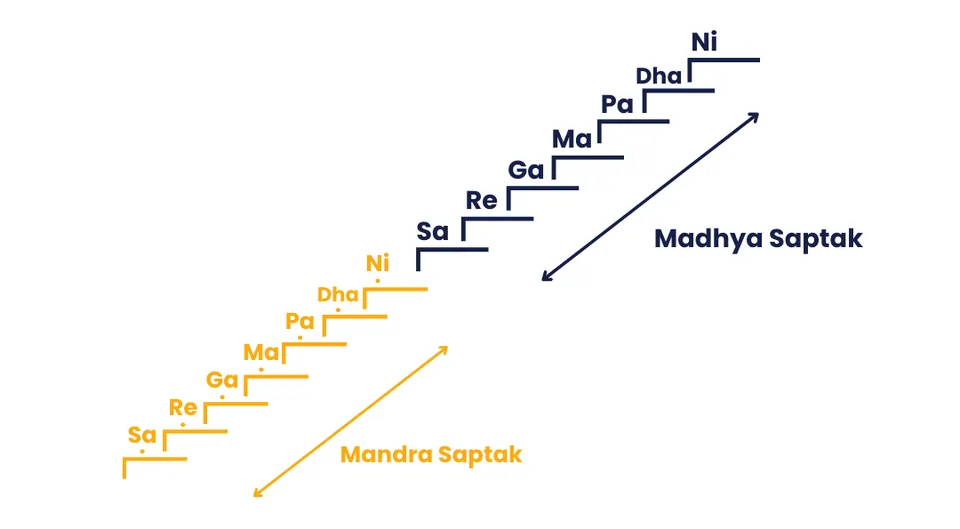
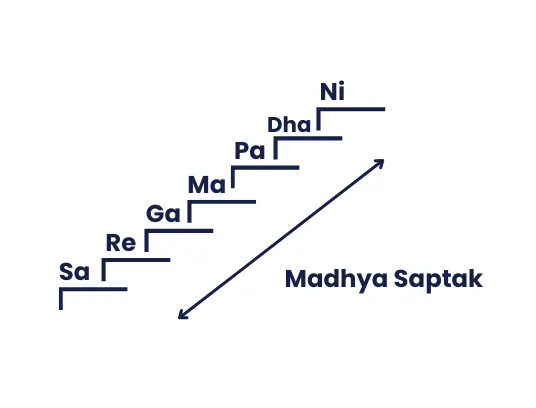
2. Madhya Saptak (Middle Octave)
This is the sweet spot where most voices naturally rest. It is the reference octave. It is the home base for all swaram practice. Most compositions, exercises, and vocal training happen in Madhya Saptak. This is because it feels balanced and comfortable.
3. Taar Saptak (Upper Octave)
This is the high range. Here notes become bright, sharp, and piercing. Singers use Taar Saptak to add sparkle, intensity, and excitement to performances. Fast, intricate taans (melodic runs) often explore the Taar Saptak. This shows off a singer's technical mastery.
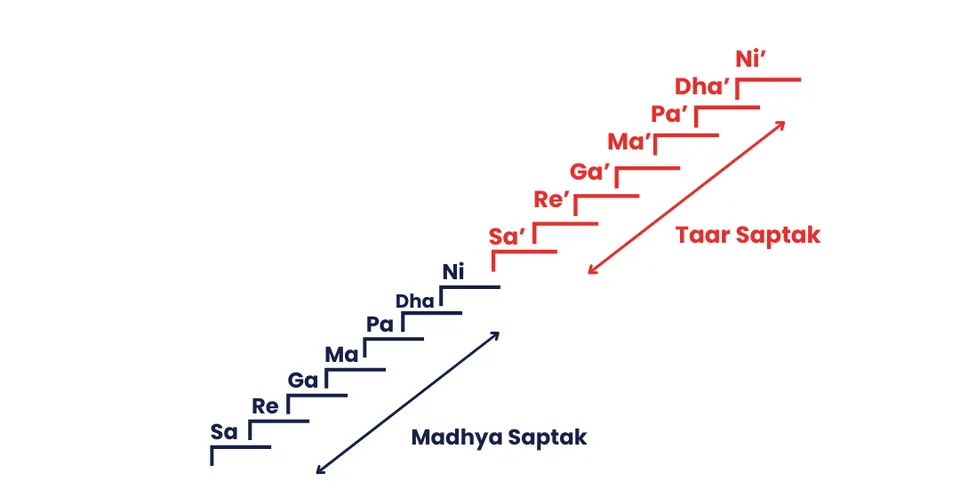
A trained classical musician usually has a vocal range covering three saptaks. They can sing from Mandra Pa (P̱a) to Taar Pa (Ṗa). This allows them to explore the full emotional and tonal range of swaram.

The 22 Shrutis: Microtones of Swaram
We recognize seven basic swaras and their variants. But the ancient theory of Indian music talks about 22 shrutis. These are the microtonal intervals that exist between the notes. Shrutis are the subtle gradations of pitch that give Hindustani music its unique character and depth.
These 22 shrutis allow for the special expression that makes Indian classical music different from Western systems. Western music uses 12 semitones per octave. Indian music's 22 shrutis give you finer control over pitch. They make possible the subtle bends, glides, and decorations that bring each swaram to life.
Swaram and Raga: An Inseparable Bond
At its core, a raga is built from swaras. Without swaram, there can be no raga. Every raga picks certain swaras and arranges them in ascending (Aaroh) and descending (Avaroh) patterns. Each pattern creates a unique mood and time association.
Example 1: Raga Yaman
Raga Yaman uses Tivra Ma. This gives it a shimmering, devotional quality. People typically perform it in the evening. It brings out feelings of beauty, longing, and romance.
Example 2: Raga Bhairav
Raga Bhairav uses Komal Re and Komal Dha. This creates a sound that is meditative, serious, and deeply thoughtful. People sing it in the early morning hours. It represents awakening and spiritual thinking.
The choice of swaram gives each raga its distinct personality and emotional landscape. It even determines when you should perform the raga during the day or year. This is why understanding swaram is so important.
Learn more about Raag and time theory in the blog below!

Spiritual Significance of Swaram
In ancient India, swaram was more than just music. It was a spiritual practice. It was a form of meditation and a path to knowing yourself. Singing a swaram was seen as a way to connect with the divine.
Sa (Shadja) was thought to resonate with the universal sound "Om". When a singer tunes their voice to Sa, they align themselves with the cosmic frequency.
Each swaram carries its own qualities:
- Rasa (emotion): Sa brings stability, Re brings passion, Ga brings joy, and so on
- Bhava (expression): The feeling and mood in the note
- Chakra association: Some traditions link swaras to energy centers in the body
This spiritual side is why Indian classical music feels so deep. It entertains, and at the same time, it takes you on an inner journey. It lifts both the performer and listener into a higher state.
Swaras in Indian Classical Music: Learning the Basics
For anyone starting their journey in Hindustani music, mastering swaram is the first step. Traditional learning follows a clear path:
Beginner Exercises
- Sa Repetition: Holding and keeping Sa steady to develop pitch accuracy
- Aaroh-Avaroh Practice: Singing scales up and down in simple ragas like Bilawal
- Komal-Shuddha Practice: Training your ear to hear subtle pitch differences
- Saptak Transitions: Moving smoothly between Mandra, Madhya, and Taar ranges
Daily Sargam Music Practice
Practicing sargam (Sa Re Ga Ma Pa Dha Ni Sa) is the foundation of classical training. Students should:
- Sing each swaram with a drone (tanpura) to keep pitch stable
- Hold each note for several beats to build control
- Practice in different ragas to understand how swaram changes
- Listen deeply to each swaram's sound and feel its emotional quality
Traditional gurus often say: "Spend hours on a single swaram. Listen to it, feel it, let it vibrate in your being." This patient approach builds the foundation for everything else.
The Role of Swaram in Performance
In a live performance, a musician's control over swaram is what pulls in the audience. A perfectly tuned Sa sets the foundation. The way a singer shapes Ga or brings out Ni can be really moving.
Instrumentalists also rely on pure swaram. Whether they play sitar, sarod, flute, or violin, the clarity and tuning of each note decides if a raga comes alive or falls flat.
Great musicians spend years getting better at:
- Hitting each swaram with precision
- Gliding smoothly between notes (meend)
- Decorating swaras with subtle pitch changes (gamak)
- Keeping perfect pitch throughout performances that can last hours
Indian Swaras vs Western Notes: Key Differences
Both systems organize music into notes and scales. But there are basic differences:
In Western music, notes are locked to specific frequencies. In Indian music, swaram is relative. You can set Sa to any comfortable pitch. All other notes adjust based on that. This flexibility allows for deeply personal expression.
Two singers can sing the same swaram a bit differently. Both can still stay true to the raga. Indian music values the journey of the note. It values the approach, the departure, and the emotion in it. The exact mathematical frequency matters less.
Swaram in Daily Life
Swaram goes beyond classical concerts. It flows through Indian culture:
- Folk music: Regional songs built on simple swaram patterns
- Bhajans: Devotional music that uses swaras to bring out spiritual feelings
- Bollywood: Film songs, though simpler, still draw from classical swaram structures
- Everyday humming: Even casual singing follows swaram principles without you knowing
Understanding swaram makes you appreciate all Indian music more. From temple bells to film soundtracks, you can hear the structure and beauty in sounds you often take for granted.
Tips for Mastering Swaram
If you're learning Hindustani classical music, here are some practical tips:
- Practice with a Tanpura: Always use a drone to train your ears to stay in tune
- Record Yourself: Listen back to find pitch mistakes
- Start Slowly: Don't rush through sargam exercises. Each swaram needs attention
- Work with a Guru: A trained teacher can fix subtle errors you won't hear yourself
- Be Patient: Getting good at swaram takes years, not months
- Listen Actively: Spend time listening to master musicians to learn perfect swaram expression
- Practice Daily: Being consistent matters more than long, random sessions
Why Swaram Matters
Whether you perform, love music, or just feel curious about Indian culture, understanding swaram opens a door to:
- Deeper musical appreciation: You'll hear details you never noticed before
- Emotional connection: Each swaram brings out specific feelings and states of being
- Cultural insight: Swaram is part of India's spiritual and artistic heritage
- Personal growth: Learning swaram develops patience, focus, and sensitivity
Swaram is more than notes on a scale. It is a complete way of thinking about sound, expression, and awareness.
Learn more about swaras and swarasthanas in Carnatic Music in the blog below!

Learning Indian Classical Music at Spardha School of Music
If you feel inspired to begin your journey with swaras in indian classical music, now is a great time to start. At Spardha School of Music, you can learn Indian classical music in a supportive, personal environment. We make this ancient art form easy to access and fun to learn.
Why choose Spardha School of Music?
- 1-on-1 Online Sessions: Personal attention means you progress at your own speed
- Friendly and Supportive Teachers: Our experienced teachers are patient, encouraging, and very knowledgeable
- Flexible Learning: Study from anywhere with online classes that fit your schedule
- Performance Opportunities: Get valuable experience through recitals and showcases to build confidence
- Structured Curriculum: From learning basic swaram to exploring complex ragas, we guide you at every step
Whether you're a complete beginner or want to deepen your understanding of Indian classical music, Spardha School of Music gives you the guidance, support, and inspiration you need to grow as a musician.
Conclusion
The journey into swaram is a lifelong exploration. From ancient times to modern practice, swaram stays as the heartbeat of Hindustani classical music. It is the foundation for building ragas, crafting performances, and creating spiritual experiences.
Frequently Asked Questions
1. How many swaras are there in Indian classical music?
There are seven basic swaras (Shuddha swaras): Sa, Re, Ga, Ma, Pa, Dha, and Ni. When you include their variants (Komal and Tivra), there are 12 different notes in a saptak (octave).
2. What are the 12 swaras?
The 12 swaras are: Sa, Komal Re, Shuddha Re, Komal Ga, Shuddha Ga, Shuddha Ma, Tivra Ma, Pa, Komal Dha, Shuddha Dha, Komal Ni, and Shuddha Ni.
3. What are the 22 shrutis in music?
The 22 shrutis are the tiny pitch intervals that divide the octave in Indian classical music. They are the finest gradations of pitch between the seven basic swaras and give Hindustani music its special depth.
4. How many notes are in Indian classical music?
Indian classical music uses 7 main notes (swaras) in their pure form. With their variants (Komal and Tivra), this grows to 12 different notes within one octave. All of this is based on the ancient system of 22 shrutis.