
Table of Contents
By Vishal Das
Carnatic music is one of the oldest and most sophisticated classical music traditions in the world. With roots that go back thousands of years, this South Indian art form has captivated audiences with its intricate melodies, complex rhythms, and soul-stirring compositions. But what makes this music so special? What are the building blocks that create these mesmerizing sounds?
The answer lies in understanding swaras in Carnatic music, the fundamental notes that form the backbone of every melody, every raga, and every composition. Whether you're a curious beginner wanting to learn Carnatic music, a parent looking to enroll your child in music classes, or simply a music lover wanting to appreciate this art form more deeply, understanding swaras in Carnatic music is your first step into this beautiful world.
Take the quiz below to check your improvement in Carnatic singing!

What Are Swaras?
Imagine trying to write without knowing the alphabet. Impossible, right? The same goes for music. Without swaras in Carnatic music, there would be no songs, no melodies, and no beautiful compositions.
Swaras in Carnatic music are simply the musical notes: like the ABCs of music. Just as English has 26 letters, Carnatic music has 7 basic notes. These are called Saptaswaras (Sapta = seven, swaras = notes).
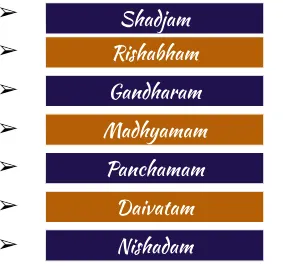
The 7 Basic Swaras
These notes can be sung going up (Arohana) or coming down (Avarohana), creating the melodies we love.
Why 12 Notes Instead of 7?
Here's where it gets interesting. If there are only 7 swaras in carnatic music, why does a piano or keyboard have 12 keys in one octave?
The answer: Swarasthanas (swara positions)
Think of it like colors. Red is one color, but it has many shades: light red, dark red, crimson, scarlet. Similarly, most swaras have different "shades" or positions. These positions are called swarasthanas.
The 12 swaras in carnatic music are actually 12 different positions that these 7 basic notes can take. When you combine these positions in special patterns, you get a raga (a melodic framework).
Two Types of Swaras
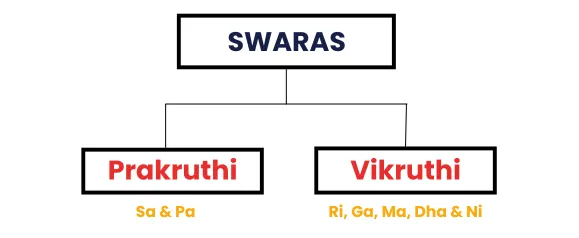
Not all swaras in carnatic music are fixed. Some stay the same, while others change. There are two kinds of swaras:1. Fixed or Prakruthi Swaras
2. Variable or Vikruthi Swaras
1. Prakruthi Swaras (Fixed Notes)
These are the constant notes that never change, no matter which song you sing.
- Sa (Shadjam) - Always stays the same
- Pa (Panchamam) - Always stays the same
These two are like anchors, they keep everything steady.
2. Vikruthi Swaras (Variable Notes)
These notes can take different positions depending on the raga.
- Ri (Rishabham) - Has multiple varieties
- Ga (Gandharam) - Has multiple varieties
- Ma (Madhyamam) - Has 2 varieties
- Da (Daivatham) - Has multiple varieties
- Ni (Nishadam) - Has multiple varieties
Example: The raga Mohanam uses one type of Ri, while the raga Malahari uses a different type. This variety is what makes each raga unique!
Understanding the 12 Swarasthanas
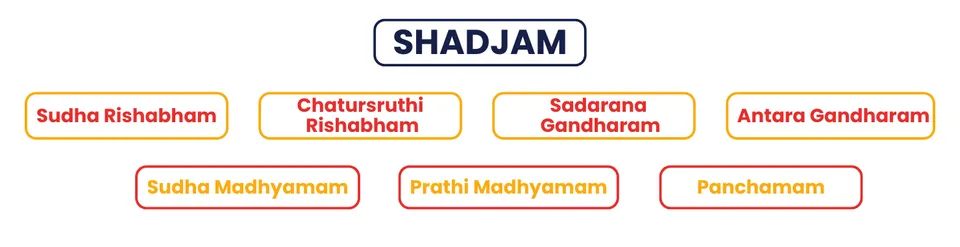
Here are the 12 notes in Carnatic music:
These 12 positions give you all the building blocks needed to create thousands of ragas!
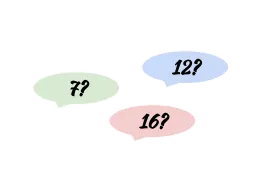
16 Swaranamas
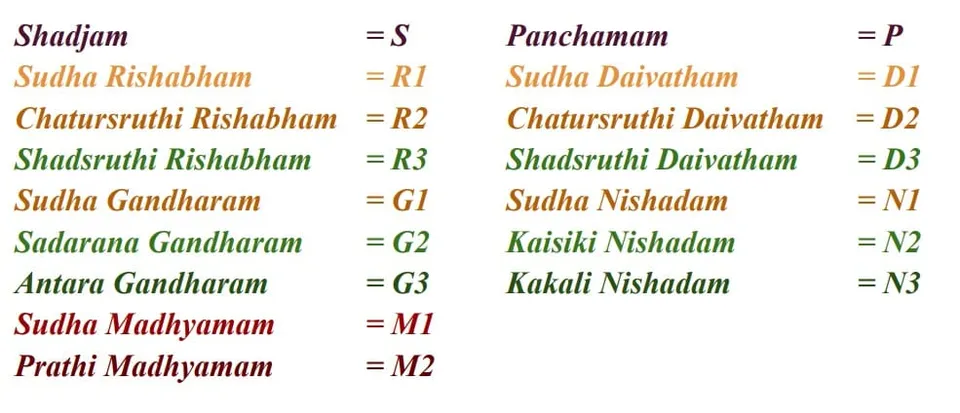
Now, here's something unique about carnatic music. While most music systems use 12 notes, Carnatic music can actually use 16 different note positions. Why?
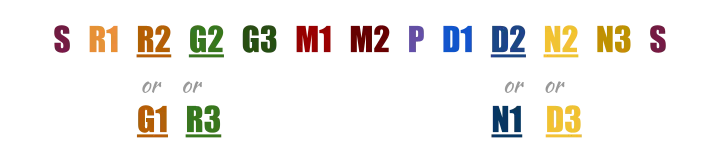
Some ragas need to use two different varieties of the same swara at the same time. For example, a raga might need both R1 and R2. To make this work smoothly, Carnatic music adds a few more positions.
Complete List of 16 Swaranamas
Rishabham and Gandharam:
- R1, R2, R3
- G1, G2, G3
Madhyamam:
- M1, M2
Shadjam and Panchamam:
- S, P (always fixed)
Daivatham and Nishadam:
- D1, D2, D3
- N1, N2, N3
This flexibility lets Carnatic music create more complex and beautiful ragas.


What Are Shrutis?
When we talk about swaras in Carnatic music, we also need to understand shrutis.
Shruti = The smallest change in pitch that your ear can detect
Carnatic music recognizes 22 shrutis in one octave. These tiny pitch differences are what make Carnatic music so rich and expressive. Not every raga uses all 22 shrutis, but they form the foundation for precise note placement.
Click on the blog below to understand Raga and Time theory in detail.

How Swaras Create Ragas
A raga is NOT just a random collection of notes. It's a carefully designed musical framework with specific rules:
Which notes to use - Only certain swarasthanas are allowedHow to move between notes - Specific phrases and patternsWhich notes to emphasize - Some notes are more importantWhat emotion to convey - Each raga has a mood or feelingWhen to perform - Some ragas suit morning, others evening
Example Comparison
See how just changing a few swarasthanas completely changes the raga's personality?
Tips for Learning Swaras
Starting your journey with Carnatic music notes? Here's how to build your skills:
1. Find Your Reference Points
- Start by learning Sa and Pa perfectly (they're fixed)
- Use these as anchors to find other notes
2. Practice Basic Ragas
- Begin with simple ragas like Mayamalavagoula
- This helps you internalize standard note positions
3. Compare and Listen
- Listen to the same song in different ragas
- Notice how changing notes changes the feeling
4. Daily Practice
- Spend 10-15 minutes daily on swara exercises
- Consistency matters more than long sessions
5. Join Classes
- An expert teacher helps you understand the basics and also point out your mistakes for a strong foundation
- A teacher also keeps you accountable for learning and practicing
At Spardha School of Music, we offer live online 1:1 classes personalized to ensure you learn at your own pace from the comfort of your home. Our professional and friendly teachers offer the expert guidance required to build a strong foundation in Carnatic music.
Why Choose Spardha?
- Personalized attention - One-on-one online classes tailored to your pace
- Flexible scheduling - Learn from home at times that suit you
- Experienced teachers - Learn from experts who make complex concepts simple
- Proven curriculum - Step-by-step progression from basics to advanced levels
- Supportive community - Join thousands of happy students
Whether you're 8 or 80, it's never too early or too late to start your musical journey.
Book your FREE trial class today and experience the joy of learning Carnatic music with expert guidance!
Swaras in Singing vs. Instruments
While the 12 notes in Carnatic music stay the same, how they're played differs:
Vocal Music:
- Uses gamakas (ornamentations—wavy movements around notes)
- Adds emotional depth through voice modulation
- Most flexible for expression
String Instruments (Veena, Violin):
- Can mimic vocal gamakas smoothly
- Great for sustained notes
Wind Instruments (Flute):
- Produces gentle, flowing gamakas
- Creates a different tonal quality
Percussion (Mridangam):
- Doesn't play notes directly
- Provides rhythmic support for the melody
Click on the blog below to explore the Raga Mohanam in Carnatic Music.

Quick Summary
Let's recap what we've learned about swaras in Carnatic music:
Frequently Asked Questions
1. What are the 12 swaras of Carnatic music?
The 12 swaras refer to the 12 swarasthanas (pitch positions) in one octave: S (fixed), R1-R2, G1-G2-G3, M1-M2, P (fixed), D1-D2, and N1-N2. These positions combine to create all ragas in Carnatic music.
2. What are the 22 shrutis in Carnatic music?
The 22 shrutis are the smallest pitch intervals that the human ear can recognize in Carnatic music. They are micro-tonal divisions spread across the octave that allow for precise note placement and greater melodic expression than the Western 12-note system.
3. What is Swara in Carnatic music?
A swara is a musical note or pitch in Carnatic music. There are 7 basic swaras (Sa, Ri, Ga, Ma, Pa, Da, Ni), with Sa and Pa staying fixed.
4. What are the 16 ragas in Carnatic music?
Carnatic music has 72 parent ragas (Melakarta system) from which thousands of other ragas are derived. And 16 swaranamas (extended note positions): R1-R2-R3, G1-G2-G3, M1-M2, D1-D2-D3, N1-N2-N3, plus fixed Sa and Pa.